Should a financial services brand use original research to earn national media coverage, natural links, and brand mentions?
The brand needed a stronger way to demonstrate expertise in debt trends. In a high-trust category like financial services, generic advice content was not enough. Buyers, journalists, and publishers needed evidence that the brand understood the larger financial pressures affecting Americans.
The opportunity was to use original research to move the brand from a service provider to a credible source in the national conversation around debt.
Key insights
- Original research earns citations: The campaign worked because it offered a useful data point, not just a brand message.
- Links accrued over time: The study kept earning links and mentions after the initial outreach push because the topic had ongoing relevance.
- Media coverage created secondary links: The Fox Business story made the research more visible, which helped attract additional inbound links beyond direct outreach.
- The value was the full authority footprint: The win was not just one placement. It was national coverage plus 58+ unique domains linking to or mentioning the brand.
- A strong data story drove distribution: The 430% student loan debt increase was simple, surprising, and easy for other publishers to reference.
Problem
Most content in the debt space explains processes, tactics, or legal considerations. That kind of content can support search visibility, but it does not always create third-party credibility.
The brand needed an authority signal that could travel beyond its own website. A standard blog post might rank, but it would not necessarily give journalists or other publishers a reason to cite the brand.
To earn a more natural link profile, the campaign needed a story with independent value: something useful, timely, and credible enough for media and secondary publishers to reference.
Strategy
PureLinq developed a data-led report showing how American debt changed over 20 years.
The research compared major debt categories, including student loans, mortgages, auto loans, and credit cards. Instead of treating the report as a broad debt overview, we looked for the clearest editorial hook inside the data.
The strongest finding was: Student loan debt increased by 430% since 2003.
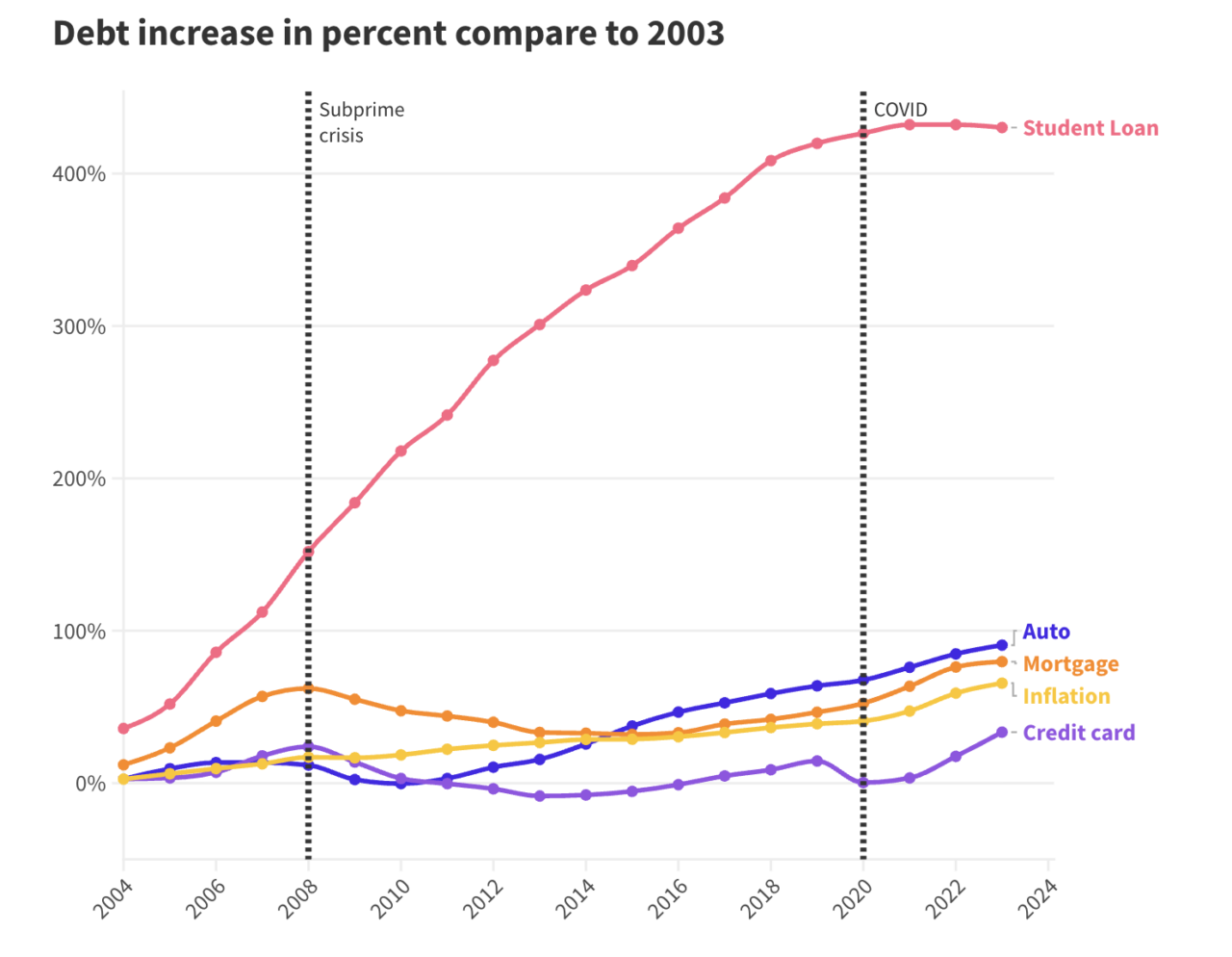
Image: data visualization to show change over time
That statistic gave the campaign a simple, timely, and emotionally relevant angle. It connected the brand’s expertise to a national personal finance issue people were already discussing.
The strategy was not just to publish a study. It was to create a citation-worthy research asset that could earn coverage, brand mentions, and links because the data was useful to others.
Process
1. Audience insights
We started by identifying the audiences most likely to care about the topic.
The audience was not only people searching for debt advice. It also included personal finance journalists, business editors, and publishers looking for credible data on household debt, student loans, credit cards, mortgages, and auto loans.
The key insight was that journalists did not need another general comment about rising debt. They needed a clear statistic that helped explain how debt had changed over time.
2. Research
We built an original data report analyzing changes in American debt from 2003 to 2023.
By comparing multiple debt categories, we were able to show that student loan debt had grown far faster than other forms of debt. That contrast made the 430% increase more meaningful and gave the story a stronger editorial frame.
The research also included state-level debt findings, which expanded the number of possible angles and made the report useful for both national and regional coverage.
3. Optimize shareability
We shaped the report so it was easy for journalists and publishers to reference.
The campaign emphasized the strongest national statistic, a clear comparison across debt categories, and geographic findings that made the research more adaptable.
The goal was to make the study easy to quote, summarize, cite, and reuse. That helped the research function as more than a single blog post. It became a source other publishers could build from.
4. Distribute
We pitched the research to relevant personal finance and business media.
The 430% student loan debt statistic became the lead angle because it was specific, surprising, and tied to an active public conversation.
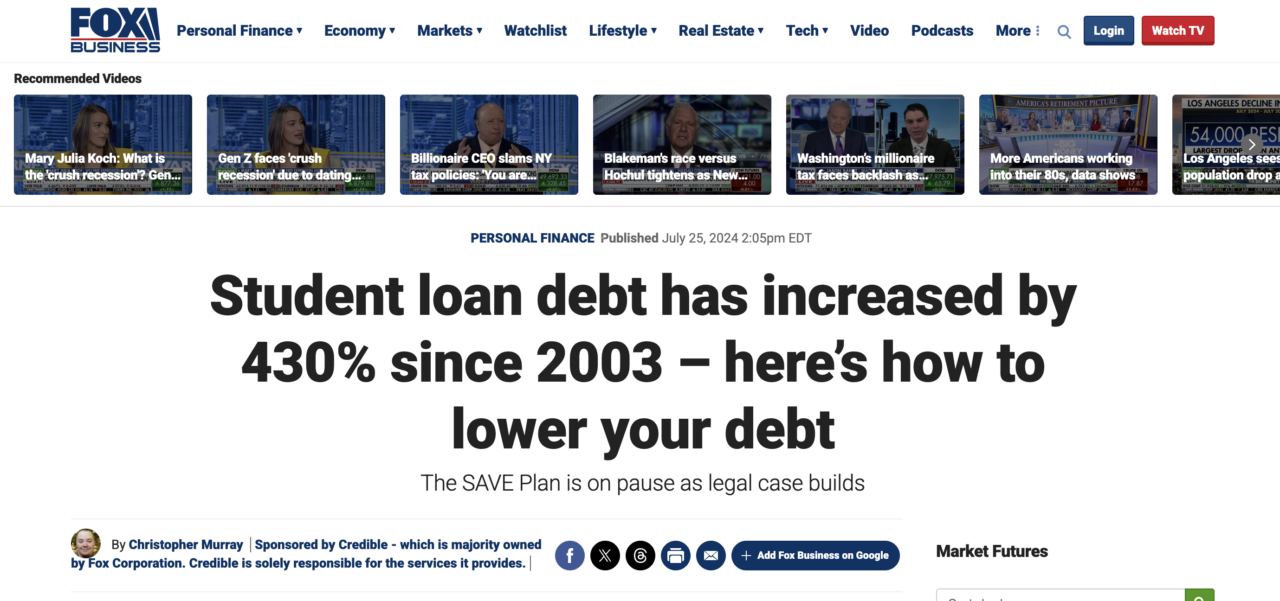
That outreach earned national coverage in Fox Business, where the study was used as the foundation for an article about the rise in student loan debt and ways consumers can reduce their debt.
Results
The campaign earned a national media placement in Fox Business, which cited the study’s key finding that student loan debt increased by 430% since 2003.
But the value extended beyond one article.
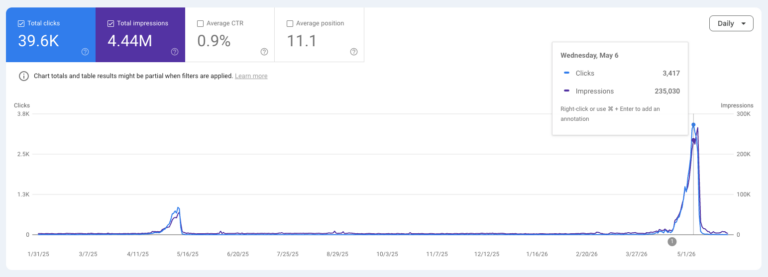
The study went on to earn links and brand mentions from more than 58 unique domains, creating a broader authority footprint around the research. These links and mentions did not come from a single burst of outreach. They accrued over time as the story became more visible, discoverable, and useful to other publishers.
Final result:
Fox Business coverage + 58+ unique domains linking to or mentioning the brand.
Why it worked
The campaign worked because the research gave publishers a reason to cite the brand.
It was not promotional content dressed up as a study. It was a useful data story with a clear statistic, public relevance, and a direct connection to a topic people already cared about.
For SEO and AI search, the value was not only the backlink from a national publication. It was the repeated association between the brand and expertise in American debt, student loans, and financial stress.
That is what made the link profile more natural. The campaign created a research asset that earned attention through media relations, then continued attracting citations and mentions as the story spread.