How do you earn high-authority links, media coverage, and AI search visibility in a crowded market, especially when your brand isn’t naturally “newsworthy”?
For this B2B financial brand, the answer was original research built around a problem their audience already felt.
Key Takeaways
1. The research hub turned content into an authority system: Monthly original research made the blog more than a publishing archive. It became a trusted source journalists, writers, search engines, and AI systems could cite.
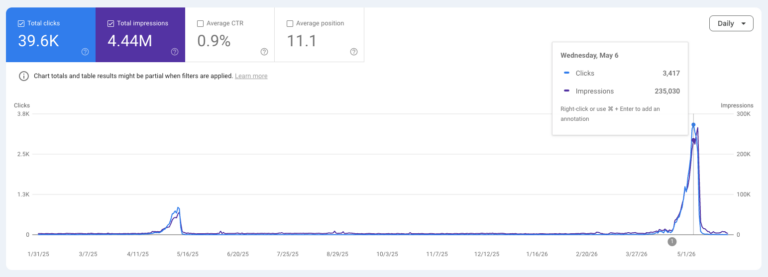
2. Citations compounded over time: Research reports went from earning 5 to 20 citations in 2024 to 70 to 200 citations in 2026, contributing to 1,300+ links and brand mentions from unique sites.
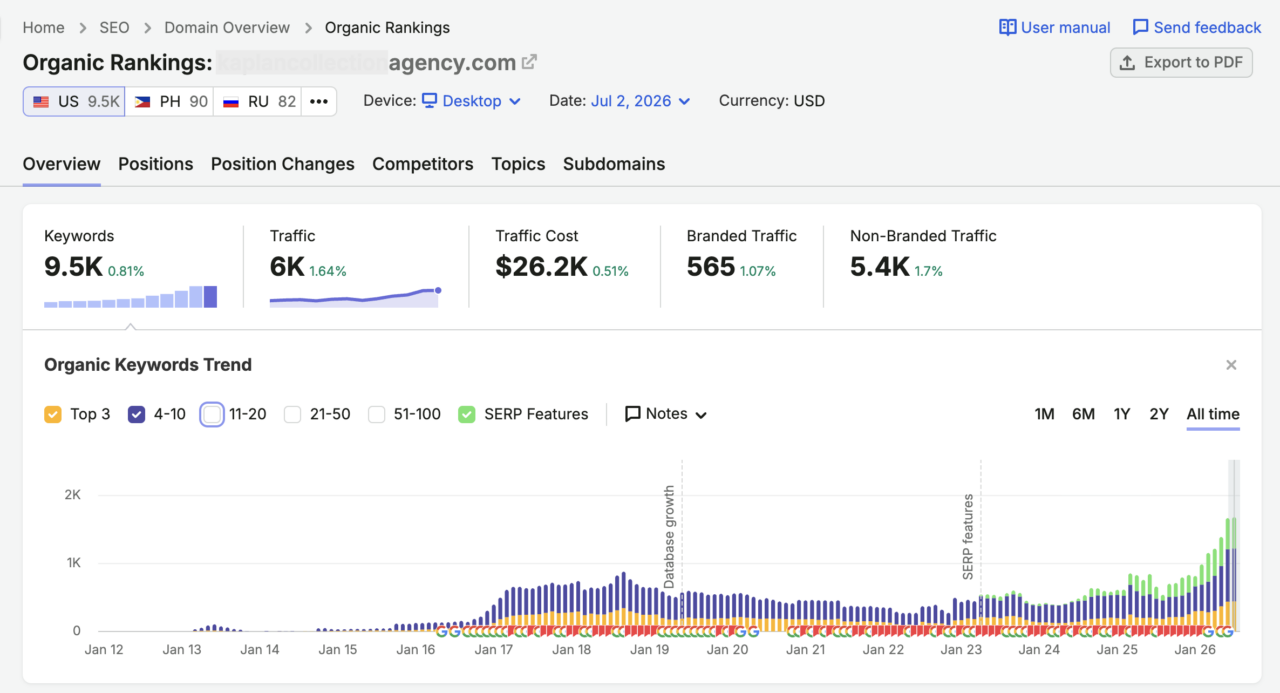
3. Organic traffic rebounded and grew: Semrush traffic estimates increased from 1,422 visits in January 2024 to 5,906 visits in June 2026, a roughly 315% increase.
4. Keyword gains moved into high-value positions: Top 3 rankings grew from 128 to 439, while top 10 rankings grew from 242 to 771, showing stronger visibility where clicks and trust are highest.
5. Authority created inbound demand: The biggest shift was that journalists and AI systems started finding and citing the data on their own. The hub became a known source, creating inbound requests from outlets like The Wall Street Journal.
Context
A B2B debt collection company that serves clients nationally, but many of its prospects search locally. This is common for “national-local” businesses: companies that operate across the country, while buyers still search by city, state, or “near me” terms.
In this market, prospects did not search only for broad national terms like “commercial debt collection.” They also searched for local variations such as “debt collection agency near me” or city-specific queries tied to business debt collection. As a result, the search results often favored local business listings and local landing pages, such as city or state collection pages, rather than only national brands.
That meant local pages were important, but local pages alone were not enough. The site needed stronger authority signals behind them. Google needed to understand that the brand had expertise across business debt, financial stress, collections, and regional economic trends.
At the same time, the search environment was changing. AI Overviews were beginning to appear for important category and informational queries, which created a new visibility challenge. If the brand was not cited, referenced, or recognized as a trusted source, it risked losing visibility even when it had relevant content.
Generic content was becoming less effective. Google and AI search systems were getting better at evaluating source quality, originality, analysis, and third-party validation. Sites that relied on non-unique content appeared more vulnerable, while brands with original data, clear insights, expert analysis, and trusted citations had a stronger opportunity to be surfaced and recommended.
The opportunity was to turn the blog into a research hub that supported both sides of discovery:
Local search visibility for prospects searching by market, state, or service area.
Authority discovery through Google, AI search, journalists, and writers looking for credible business and financial data.
By publishing original research monthly, the brand could build a source library that supported local rankings, national media coverage, AI citations, and inbound journalist discovery.
Barriers to Growth
The existing blog model was built primarily for search engines, not for the full discovery ecosystem.
Traditional posts could target keywords, but they did not create enough independent value for journalists, publishers, bloggers, or AI systems to cite. The brand needed more than content volume. It needed a stronger authority engine.
The challenge was to build a system where each new research report could earn links and mentions, support rankings, strengthen topical authority, and increase the chances of being cited in AI search.
Instead of treating every article as a standalone post, the goal was to make each report strengthen the whole domain.
Strategy
PureLinq converted the blog into a research hub and began publishing original research on a monthly basis.
The strategy was to create a consistent pipeline of 1-3 original research reports per month around business, debt, finance, and economic stress. Each study was designed to serve multiple discovery channels at once:
- Search engines needed useful, differentiated content.
- Journalists needed credible data and story angles.
- AI search systems needed repeated third-party signals that associated the brand with business and financial research.
- Local and national publishers needed statistics that could be adapted to their audiences.
Instead of treating digital PR, SEO, and content as separate efforts, the research hub connected them into one compounding system.
How it worked
1. Audience insights
We identified the audiences most likely to cite, reference, or search for financial research.
That included business journalists, personal finance editors, local news reporters, industry trade publications, bloggers, and people searching for debt and business finance information.
The key insight was that these audiences did not need generic financial advice. They needed data that helped explain what was happening in the economy, where financial pressure was increasing, and how those trends affected businesses and consumers.
2. Research
We created 1 to 3 original research reports on average per month.
Each report focused on a timely financial or business issue, such as household debt, commercial real estate risk, late payments, business distress, or state-level financial trends.
Example titles:
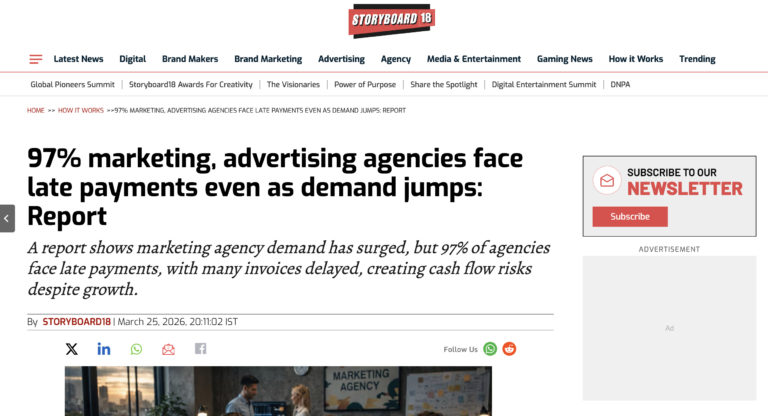
- New Survey: 93% of Companies See Revenue Loss from Late Payments—Some Lose Over 10%
- How Student Debt Is Locking Millennials and Gen Z Out of Homeownership
- Is Commercial Real Estate at a Breaking Point in 2025?
- Which US Financial Districts Could See The Most Office Foreclosures?
The repeated publishing cadence mattered. A single study could earn links. A monthly research system could build recognition, topical authority, and a deeper library of citation-worthy assets.
Over time, the research hub became a body of evidence, not just a collection of blog posts.
3. Optimize shareability
Each report was optimized to be shareable and searchable for media, traditional search, and AI discovery.
That meant structuring the research around:
- Clear headline statistics
- National and local ranking angles
- State-level findings
- Simple charts and tables
- Quotable summaries
- Search-relevant topic framing
- Media-friendly takeaways
The goal was to make every report easy to cite, summarize, quote, and republish. This helped the content earn links and brand mentions through direct outreach and through secondary discovery after the stories were published.
4. Distribute
We cut the research into specific angles, depending on the journalists, and pitched it to national business media, personal finance publications, local news outlets, industry trade publications, and relevant blogs.
The research earned placements and mentions from major and niche publishers, including Fox Business, The Wall Street Journal, MSN, Kiplinger, The Seattle Times, local news media in targeted states, industry trade publications, and blogs.
As the hub became more visible, distribution became less dependent on outbound pitching alone. Journalists began discovering the research independently by coming directly to the website or in AI search.. The brand even received inbound requests from Wall Street Journal reporters because the research hub had become a known source for business financial research.
Results
The research hub created a measurable compounding effect across citations, organic traffic, and high-value keyword rankings.
By converting the blog into a monthly original research hub, the campaign turned individual studies into a long-term authority system. Each report created new data for journalists, writers, search engines, and AI systems to cite. Over time, that changed the site from a content archive into a trusted source for business and financial research.
The results showed up across three major areas:
1. Citations grew from occasional wins to consistent authority signals
In 2024, typically earned 2 to 20 links and brand mentions per month.
By 2026, that range had grown to approximately 70 to 200 links and brand mentions per month.
That growth came from more than outbound media relations. As the research hub became more visible in traditional search and AI search, journalists and writers began finding the data on their own. This created inbound requests, repeat citations, and secondary mentions after the original stories were published.
The campaign ultimately generated 1,300+ links and brand mentions from unique sites, including coverage and citations from Fox Business, The Wall Street Journal, MSN, Kiplinger, The Seattle Times, targeted local news outlets, industry trade publications, and blogs.

2. Organic traffic rebounded and grew
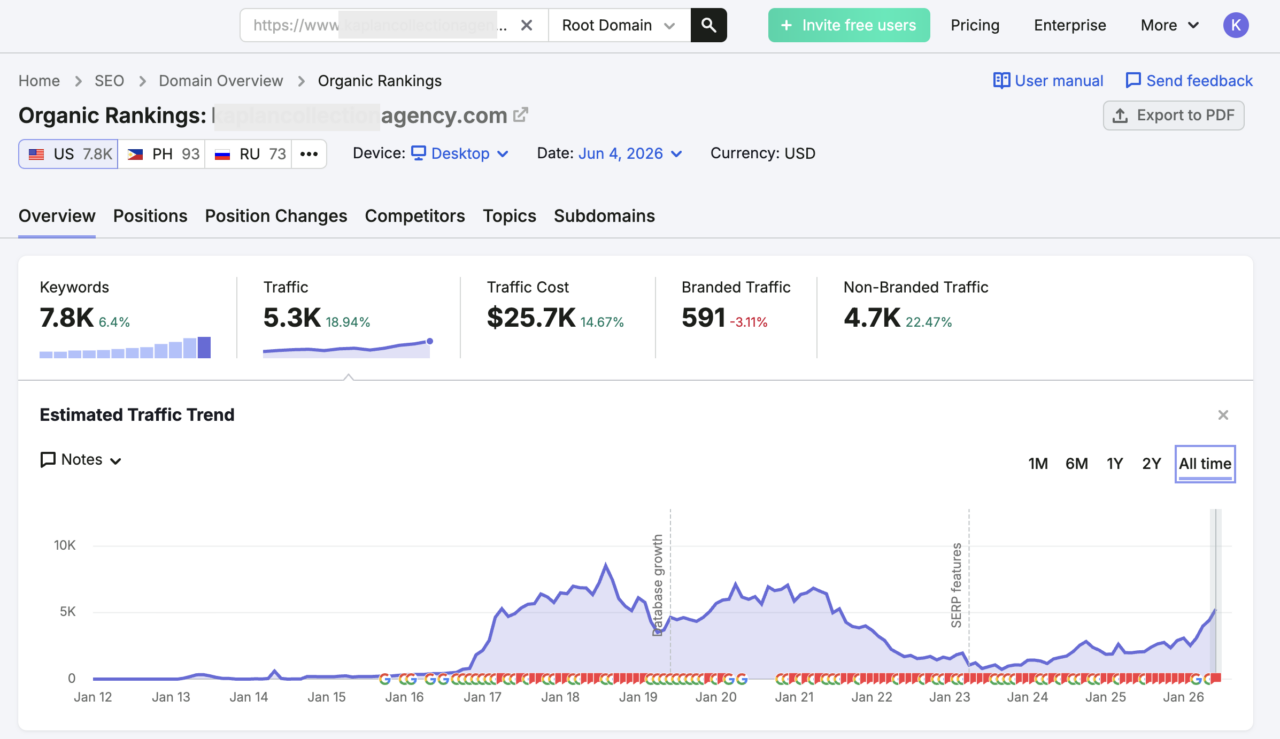
Semrush traffic estimates show that organic traffic increased from 1,422 visits in January 2024 to 5,906 visits in June 2026.
That is a gain of 4,484 monthly visits, or roughly 315% growth.
This matters because the growth was not just a temporary spike from a single campaign. The research hub helped reverse traffic losses and rebuild visibility over time as more studies, citations, and ranking assets accumulated.
3. Top-ranking keywords increased significantly
The campaign also improved the quality of keyword rankings, not just the total count.
In the January 2024 sample, the site had:
- 397 ranking keywords
- 128 keywords in the top 3
- 242 keywords in the top 10
By June 2026, the site grew to:
- 439 keywords in the top 3
- 771 keywords in the top 10
That means top 3 keyword rankings increased by 243%, and top 10 keyword rankings increased by 219%.
This is one of the strongest signals from the case study. The research hub did not only create more content. It helped the site earn better rankings in the positions most likely to drive visibility, clicks, and trust.
4. The research hub became a source journalists returned to
As the hub gained authority, the brand started earning inbound requests from journalists, including reporters from The Wall Street Journal.
That is the clearest evidence that the strategy moved beyond pitching. The research hub became known as a source of business financial data. Journalists came back for more because the site consistently published useful, citeable research.
5. AI Overview visibility increased
The research hub also improved visibility in AI-influenced search results.
As AI Overviews started appearing for key category keywords, the site began gaining visibility in those SERP features. In the tracked keyword set, Semrush showed growth in both top 3 rankings and SERP feature visibility, including AI Overview-style results.
By July 2026, the tracked set showed:
- 216 keywords ranking in positions 1–3
- 433 keywords with SERP feature visibility
- 649 total combined top 3 and SERP feature opportunities
This matters because AI Overviews and AI search systems appeared to reward the same qualities the research hub was built around: original data, clear analysis, unique insights, third-party validation, and topical authority.
6. AI and traditional search reinforced the citation loop
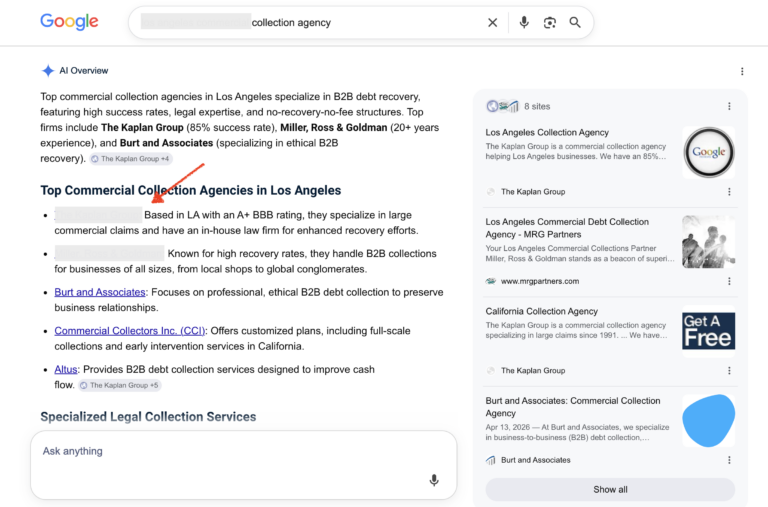
The hub also began appearing in AI-recommended lists and being cited through AI search discovery.
That created a feedback loop:
Monthly research → media citations → stronger search visibility → AI/search discovery → inbound journalist requests → more citations.
The result was a compounding authority system where each new report strengthened the visibility of the entire hub.
Why it worked
The campaign worked because the strategy created compounding signals.
Each monthly report added another citation-worthy asset to the site. Each media placement increased the brand’s visibility. Each third-party mention strengthened the association between the brand and business financial research. Each new link helped reinforce the authority of the broader research hub.
This created a flywheel:
Original research → media coverage → third-party citations → stronger search visibility → more discovery → more inbound links and journalist requests.
The research hub also changed the nature of the link profile. Links were not only created through outbound media relations. They also accrued over time as published stories were discovered, referenced, and reused by other publishers.
For SEO and AI search, that matters. The brand was not just building backlinks. It was building a recognizable authority pattern around financial research.