

We increased organic traffic for an e-commerce brand selling holiday gifts by creating compounding links and brand mention growth over several months, generating 3x in sales during the same time period.
Client: E-commerce holiday gift brand
Market: U.S.
Work: Digital PR + original research
Core behavior to change: Get Google, AI search systems, and publishers to treat the brand as a trusted source for holiday gifting data, not just another retailer.
Challenge
Holiday gift searches are highly competitive, seasonal, and increasingly disrupted by AI Overviews.
For an e-commerce brand selling gift baskets and holiday gifts, the old SEO playbook was not enough. Product and category pages were competing against retailers, publishers, marketplaces, listicles, and AI-generated answers that could reduce click-through from Google.
The question was:
Could original research help an e-commerce brand gain rankings, clicks, links, and sales without relying only on links pointed directly at commercial pages?
Approach
PureLinq built a repeatable digital PR system around seasonal research reports published on the blog.
Instead of asking publishers to link directly to money pages, we created research that journalists could cite:
- Holiday shopping statistics
- Mother’s Day gift trends
- Easter candy and gift data
- Father’s Day gift preferences
- Fruit, food, wine, and gifting behavior reports
Each report was designed to do three things:
- Give journalists a timely story
- Earn links and brand mentions from relevant publishers
- Strengthen the brand’s topical authority around holiday gifting
- Help the audience make decisions related to the brand’s products
The compounding effect mattered. One report did not carry the campaign. Multiple research reports created repeated link growth across the same commercial theme: gifts, holidays, food, baskets, and seasonal shopping.
Solution
We used a research-led link building model.
The links pointed primarily to blog research reports, not directly to the pages we wanted to rank. Then the blog reports helped build authority around the site’s seasonal gifting topics and supported internal pathways to the commercial pages.
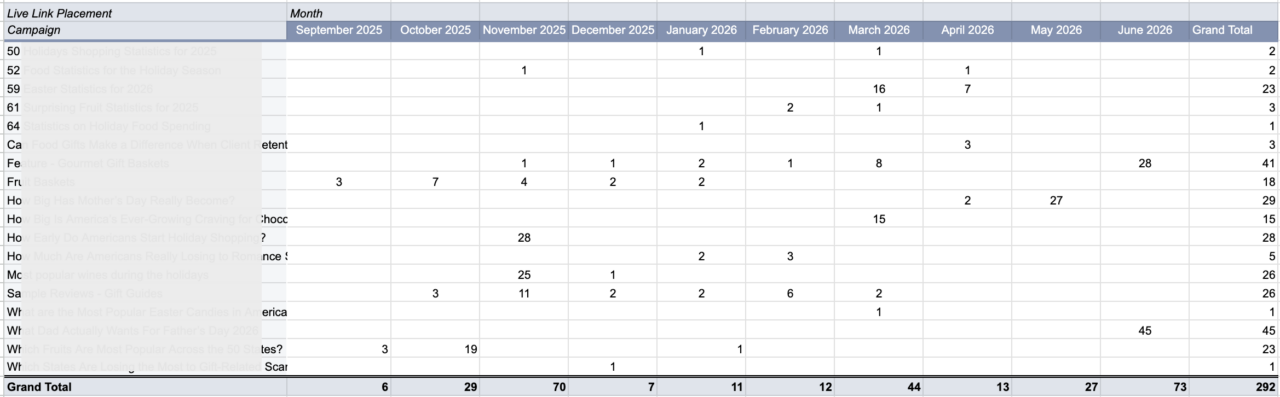
Over several months month, the campaign generated:
- 292 total live placements
- 112 placements prior Christmas holiday 2025
- 44 placements in March 2026
- 73 placements in June 2026
- 45 placements from one Father’s Day report
- 29 placements from a Mother’s Day report
- 23 placements from an Easter report
This created a layered signal: the brand was not just selling gifts. It was repeatedly being cited as a source of holiday gifting insight.
Impact
The campaign turned seasonal research into measurable search and revenue growth.
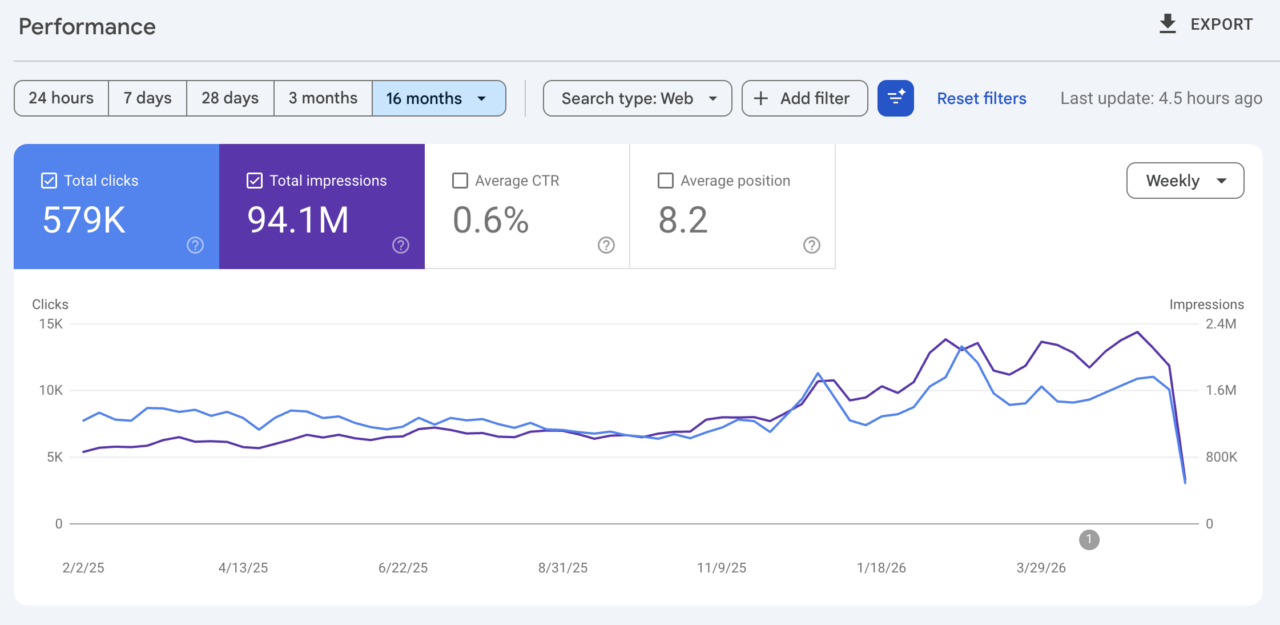
Across the comparable year-over-year period available in Google Search Console, organic clicks grew from 4,850 to 27,676.
That is:
+22,826 more clicks
+471% year-over-year growth
5.7x more organic clicks
During the core Mother’s Day season, from April 1 to May 31, clicks increased from 4,737 to 27,535.
That is:
+22,798 more clicks
+481% year-over-year growth
5.8x more clicks during peak seasonal demand
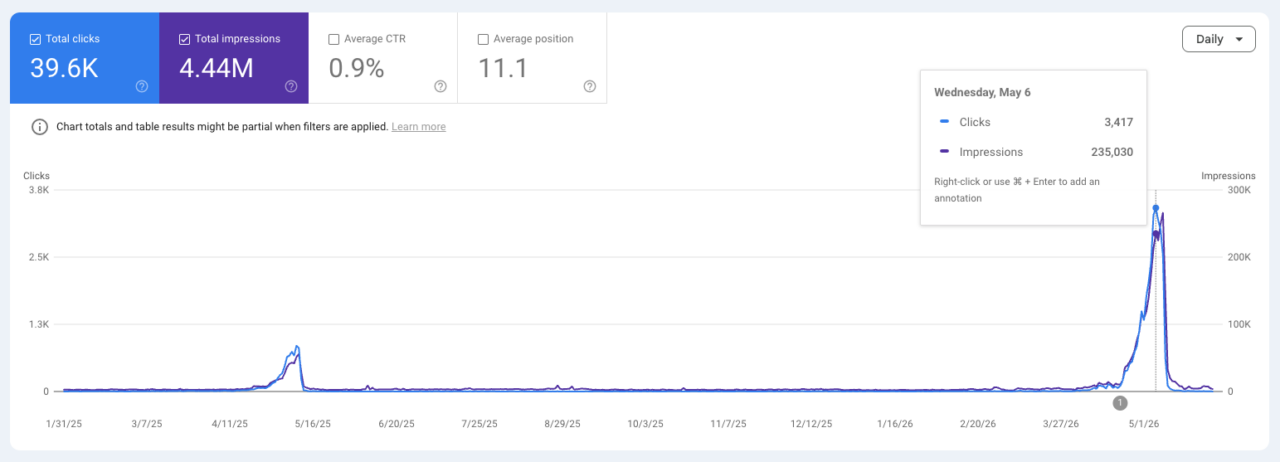
The strongest example was the Mother’s Day category. Google Search Console showed:
- 39.6K total clicks
- 4.44M total impressions
- 0.9% average CTR
- 11.1 average position
- A daily peak of 3,417 clicks and 235,030 impressions on May 6
- The Mother’s Day gift basket page generated 31,914 clicks and 3.31M impressions in the exported data
- Key Mother’s Day terms moved into high-value visibility, including top-3 ranking growth for category keywords
During the same period, the brand reported 3x growth in sales.
The important point is not just that links increased. It is that links increased around the seasonal topics where the brand needed to rank.
Why It Worked
Most e-commerce SEO tries to build authority by forcing links to commercial pages.
This worked because the campaign did the opposite.
We created linkable research assets that publishers actually wanted to cite, then used those assets to build topical authority around commercial search demand.
The mechanics were simple:
- Research reports earned links.
- Links strengthened the blog and domain.
- Internal relevance supported seasonal category pages.
- Category pages gained visibility before peak demand.
- Higher rankings produced more clicks when shoppers were ready to buy.
That is the compounding effect.
A single link to a product page can help once. A portfolio of research reports can keep producing authority, mentions, rankings, and visibility across multiple seasonal windows.
Key Learning
For e-commerce brands, digital PR works best when it is not treated as a one-off link campaign.
The stronger model is a seasonal authority system:
Publish timely research before demand peaks.
Earn links while journalists need the story.
Connect the research to commercial pages.
Repeat across holidays and categories.
Let authority compound.
That is how an e-commerce brand can grow organic traffic even as AI Overviews reduce clicks for weaker, less differentiated content.